Understanding Shares
How Did the Nigerian Exchange Become What It Is Today?
By Oluwadamilola Ojo · 19 November 2026 · 4 min read
How Did the Nigerian Exchange Become What It Is Today?
Every market has a history, and knowing it helps you understand why things work the way they do today. The Nigerian Exchange did not start as a big electronic marketplace. It started small, with a handful of companies and government securities, and grew alongside the Nigerian economy, through booms, crashes and reforms.
You do not need to memorise dates. What matters is the pattern: each stage of the market's history left something behind, such as rules, institutions, habits and, for many families, shareholdings that they have since forgotten.
Here in Nigeria
Here is the story in broad strokes. Dates are given as a guide.
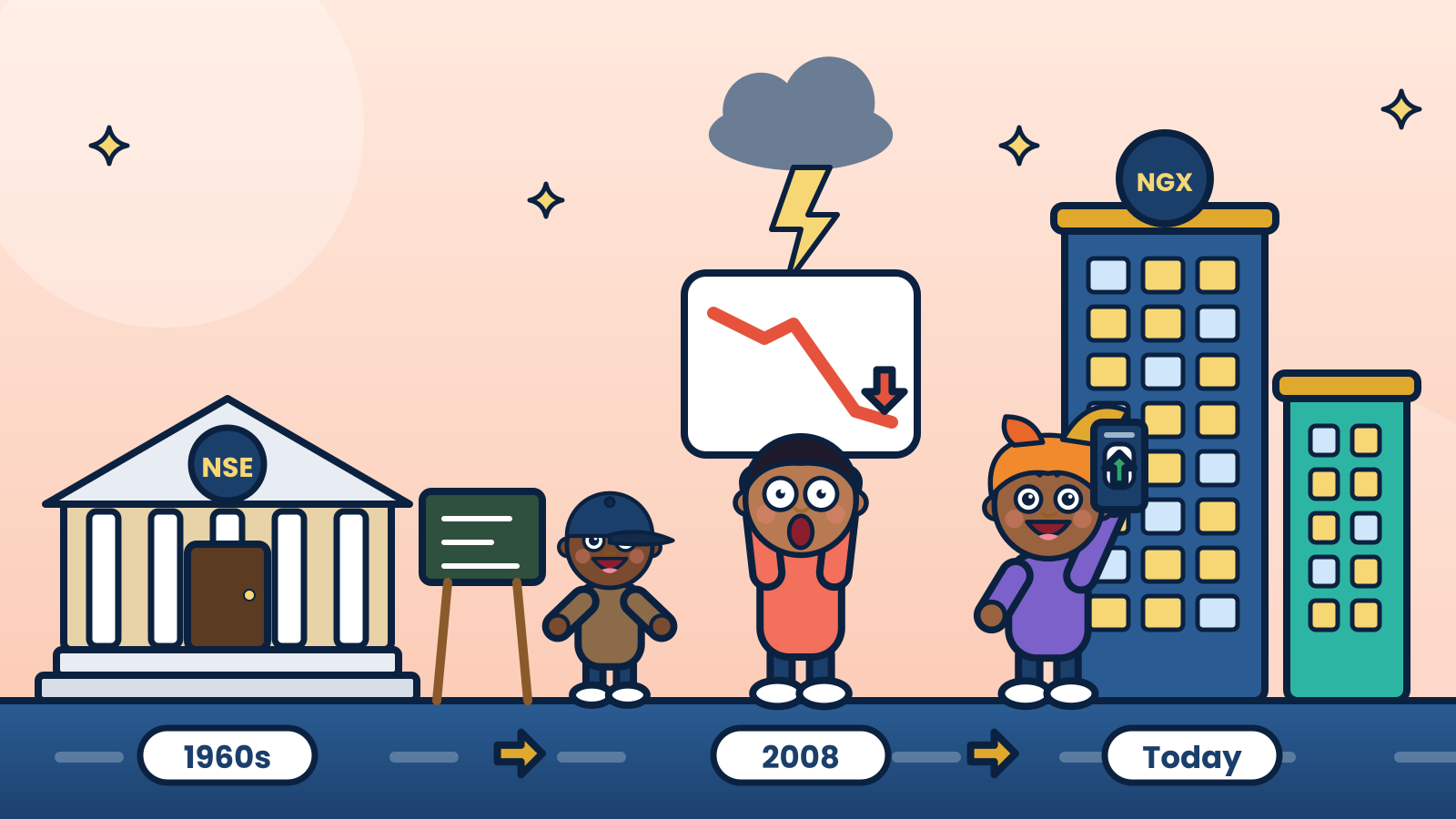
1960 to 1961: the beginning. The Lagos Stock Exchange was set up around independence. Early trading was mostly in government stock and a small number of companies.
1970s: indigenisation. Government decrees required foreign-owned companies to sell part of their shares to Nigerians. Many companies listed, and many ordinary Nigerians bought shares for the first time.
1977: a national exchange. The Lagos Stock Exchange became the Nigerian Stock Exchange, with trading floors opened in other cities over the years.
Late 1980s to 1990s: privatisation and new infrastructure. Government sold its stakes in several enterprises to the public. The Central Securities Clearing System was created to settle trades and later hold shares electronically.
1999 onwards: electronic trading. The exchange moved from shouting on a trading floor to an automated trading system.
2004 to 2008: the boom. Bank recapitalisation brought huge public offers. Millions of Nigerians bought shares, often for the first time.
2008 to 2009: the crash. Prices fell very sharply during the global financial crisis and local banking problems. Many new investors lost money and confidence, and some simply walked away from their holdings.
2010s: rebuilding. Regulators tightened rules on disclosure, governance and investor protection. Electronic dividend payments were promoted.
2021: demutualisation. The Nigerian Stock Exchange was restructured into a company owned by shareholders, under NGX Group, with the exchange itself now operating as Nigerian Exchange Limited (NGX).
A simple example
History explains the shares people find in their family papers today. Here is how one made-up family's holdings line up with the market's story.
Period |
What happened in the market |
What the Adeyemi family did |
1978 |
Indigenisation offers |
Grandfather bought shares in a manufacturing company |
1992 |
Privatisation offers |
Father bought shares in a privatised company |
2006 |
Bank recapitalisation offers |
Mother bought shares in two banks |
2009 |
Market crash |
Mother stopped checking her shares after prices fell |
Today |
Electronic market, NGX |
The children find certificates and letters from all four periods |
Each of those holdings may have been renamed, merged, split or given bonus shares since. Each may also have unclaimed dividends attached. The family's papers are a small history of the Nigerian market.
Why this matters to you
Understanding the history helps you understand three things. First, why so many Nigerians own shares they have forgotten about. Second, why the market has the rules it has today, many of which were written after something went wrong. Third, that markets go through cycles. Booms do not last forever, and neither do crashes.
What people often get wrong
"The stock market is new in Nigeria." It is over sixty years old. Several generations of Nigerians have owned shares.
"The 2008 crash proved shares are a scam." The crash was painful and real, and some companies did fail. But a crash is a fall in prices, not proof that the whole system is fake. Many companies survived and kept paying dividends.
"NGX is a different market from the old Nigerian Stock Exchange." It is the same market, reorganised and renamed. Shares listed before 2021 continued to trade on NGX.
The one thing to remember
The Nigerian Exchange has been growing and changing for over sixty years. Many families hold pieces of that history, often without knowing it. |
Over to you
Did anyone in your family buy shares during the indigenisation years, the privatisation era, or the 2005 bank offers? What happened to those shares?
This article is for education only and is not investment advice. Company names, prices and figures in the examples are made up to show how things work. Rules, rates and fees change, so check the current position before acting.