Understanding Shares
Is That Old Dividend Warrant in Your Drawer Still Worth Anything?
By Oluwadamilola Ojo · 22 November 2026 · 3 min read
Is That Old Dividend Warrant in Your Drawer Still Worth Anything?
Before electronic payments, dividends in Nigeria were usually paid by dividend warrant. A warrant looks like a cheque. It shows the company, the shareholder's name, the number of shares, the dividend per share, the amount payable and the date. The shareholder took it to a bank and paid it into an account.
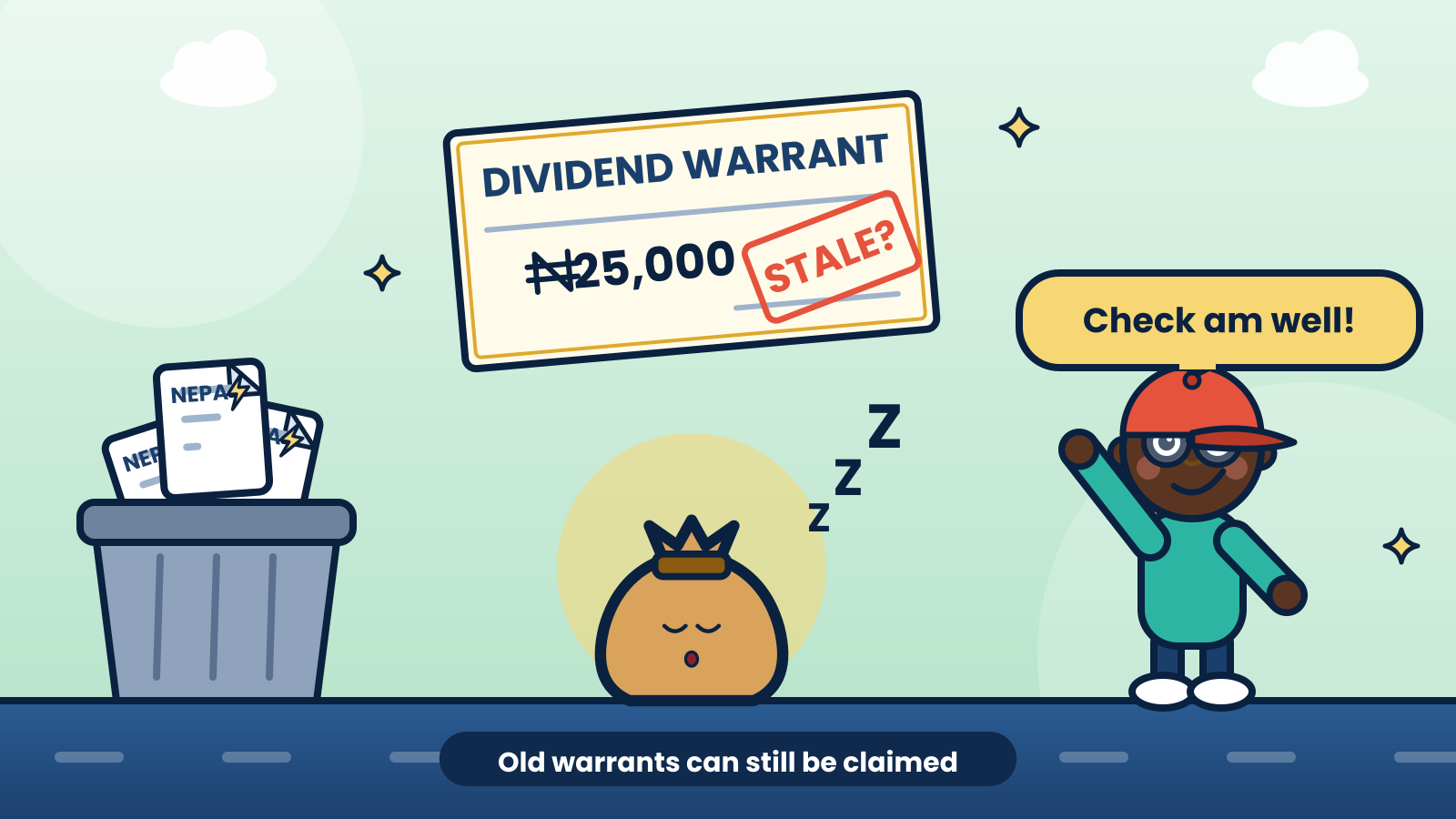
Many warrants were never cashed. Some arrived late. Some went to old addresses. Some were kept "for later" and forgotten. After a certain period, usually some months, a warrant becomes stale, which means a bank will not accept it any more.
A stale warrant cannot be paid into a bank. But the money behind it does not expire just because the paper did. In most cases, the registrar can revalidate the warrant or, more often today, pay the amount electronically once your details are confirmed.
Here in Nigeria
Over the years, the Nigerian market moved from paper warrants to electronic dividends, paid directly into shareholders' bank accounts. This change was meant to stop the problem of lost and stale warrants. But it did not fix the warrants that already existed.
Many Nigerian families still have bundles of uncashed warrants, sometimes for companies whose names have since changed. Each one is evidence of a dividend that was declared and not paid. Registrars generally keep records of which warrants were cashed and which were not.
A simple example
Mrs Bakare finds five warrants from a made-up company, Delta Foods Plc, in her late husband's file.
Year |
Dividend per share |
Shares |
Amount on warrant |
2004 |
₦0.80 |
10,000 |
₦8,000 |
2005 |
₦1.00 |
10,000 |
₦10,000 |
2006 |
₦1.00 |
12,000 (after bonus) |
₦12,000 |
2007 |
₦1.20 |
12,000 |
₦14,400 |
2008 |
₦1.20 |
12,000 |
₦14,400 |
Total |
|
|
₦58,800 |
The warrants themselves are stale. But they show:
The holder's name, as recorded on the register.
The number of shares, including a bonus issue in 2006.
The registrar, usually printed on the warrant.
That dividends were being declared, so there may be later years too, which were never even sent.
With his death certificate and the legal documents that show who is entitled to his estate, she can approach the registrar, ask for these amounts to be confirmed and paid, and find out about the shares and every dividend since 2008.
Why this matters to you
Never throw away old dividend warrants, even if they are long out of date. Keep them flat, take clear photographs of both sides, and list them with dates and amounts. They are some of the strongest evidence you can have when making a claim, because they show exactly what the registrar issued in your name.
What people often get wrong
"Stale means the money is gone." Stale means the paper can no longer be banked. The entitlement usually remains and can be paid another way.
"The amount is small, so it is not worth it." One warrant may be small. The years after it, and the shares themselves, may be worth much more.
"I need the original warrant to claim." It helps a great deal, but registrars also hold their own records. If the warrant is lost, you may still be able to claim with other evidence.
The one thing to remember
A stale dividend warrant cannot be banked, but it is proof that money was declared in your name. Keep it, and use it to claim what is still owed. |
Over to you
Do you have old dividend warrants at home? Have you ever counted up how much they add to?