Understanding Shares
What Happens to Your Shares When a Company Leaves the Exchange?
By Oluwadamilola Ojo · 19 November 2026 · 4 min read
What Happens to Your Shares When a Company Leaves the Exchange?
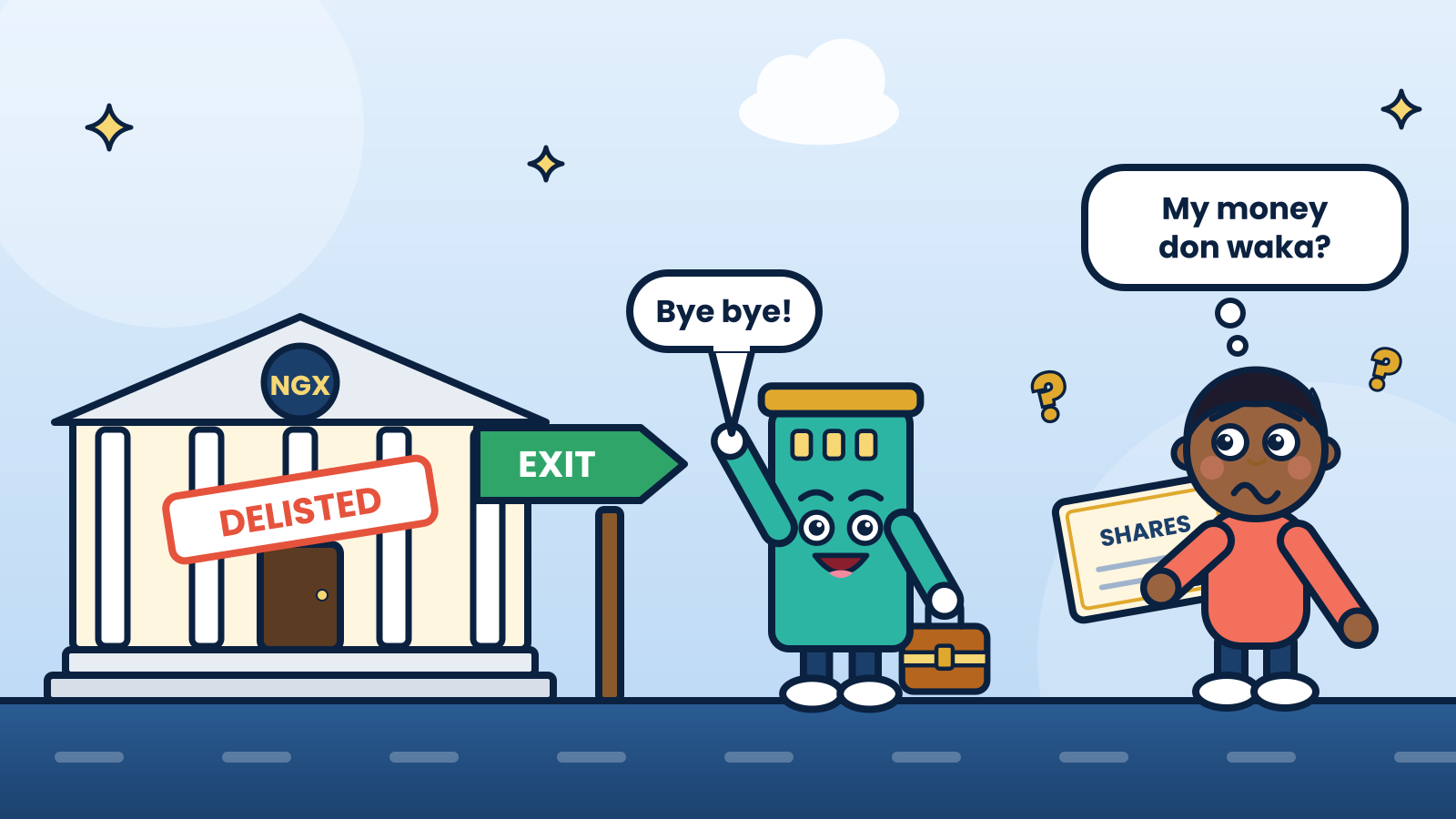
A company that is listed can stop being listed. This is called delisting. After delisting, its shares no longer trade on the Nigerian Exchange.
The first thing to understand is that delisting does not cancel your shares, If the company still exists, you are still a shareholder. What changes is how easy it is to sell your shares and what information you receive.
Companies leave the exchange for different reasons:
Voluntary delisting. The company, or its main shareholder, decides it no longer wants to be listed, often to save costs or to take full control. Usually they offer to buy out other shareholders first.
Regulatory delisting. The exchange removes the company for breaking the rules, such as failing to publish results, falling below free float requirements, or not paying listing fees.
Merger or takeover. The company is absorbed into another company. Its shareholders usually receive shares in the new company, cash, or both.
Liquidation. The company is wound up. Shareholders are paid only after creditors, and often receive little or nothing.
Here in Nigeria
Several well-known companies have left the NGX over the years. Some were bought out by their foreign parent companies, which offered minority shareholders a price for their shares. Others were removed by the exchange after years of failing to file accounts and Bank mergers in the 2000s also turned many banks' shareholders into shareholders of other banks.
Before a voluntary delisting, there is usually a process that includes a shareholders' meeting, an offer to buy out minority shareholders, and approval from the exchange and the SEC. Shareholders are given a deadline to accept the offer.
A simple example
Here are three made-up outcomes for a shareholder holding 10,000 shares worth ₦12 each.
Situation |
What the shareholder is offered |
What happens if they do nothing |
Voluntary delisting with a buy-out |
₦13 per share in cash, ₦130,000 total |
They keep the shares in an unlisted company. Selling later is much harder. |
Merger with another listed company |
1 new share for every 2 old shares, so 5,000 new shares |
The shares are converted automatically, usually through the registrar |
Removal by the exchange for not filing accounts |
Nothing is offered |
They still own the shares, but cannot trade them on the NGX, and information may be scarce |
In the first case, ignoring the letter could mean staying locked in a company with no public market. That is why reading shareholder notices matters.
Why this matters to you
If a company you own announces plans to delist, take it seriously. Read the circular, understand the price being offered, and decide before the deadline. If your contact details with the registrar are out of date, you may never even receive the letter, which is one more reason to keep them current.
If you discover a holding in a company that has disappeared from the exchange, do not assume it is worthless. Ask the registrar what happened: a merger, a buy-out with unclaimed money waiting, or a company that still exists unlisted.
What people often get wrong
"Delisted means my shares are gone." Usually not. Your ownership continues unless the company was liquidated. The shares just stop trading on the exchange.
"The buy-out offer is automatic." Often you must accept it within a time limit. If you do nothing, you may be left holding unlisted shares.
"If I missed the buy-out years ago, the money is lost." Not always. In some cases, payments for shareholders who did not respond are held by the registrar or the company. It is worth asking.
The one thing to remember
When a company leaves the exchange, your shares do not simply vanish. Find out why it left, what you were offered, and whether anything is still waiting for you. |
Over to you
Do you know of a company your family once owned shares in that is no longer on the exchange? Has anyone found out what happened to those shares?