Understanding Shares
What Is CSCS, and Why Can't You Own Listed Shares Without an Account?
By Oluwadamilola Ojo · 19 November 2026 · 4 min read
What Is CSCS, and Why Can't You Own Listed Shares Without an Account?
When you buy shares on the Nigerian Exchange, something needs to record that the shares have moved from the seller to you. That something is a central securities depository. In Nigeria it is the Central Securities Clearing System, usually just called CSCS.
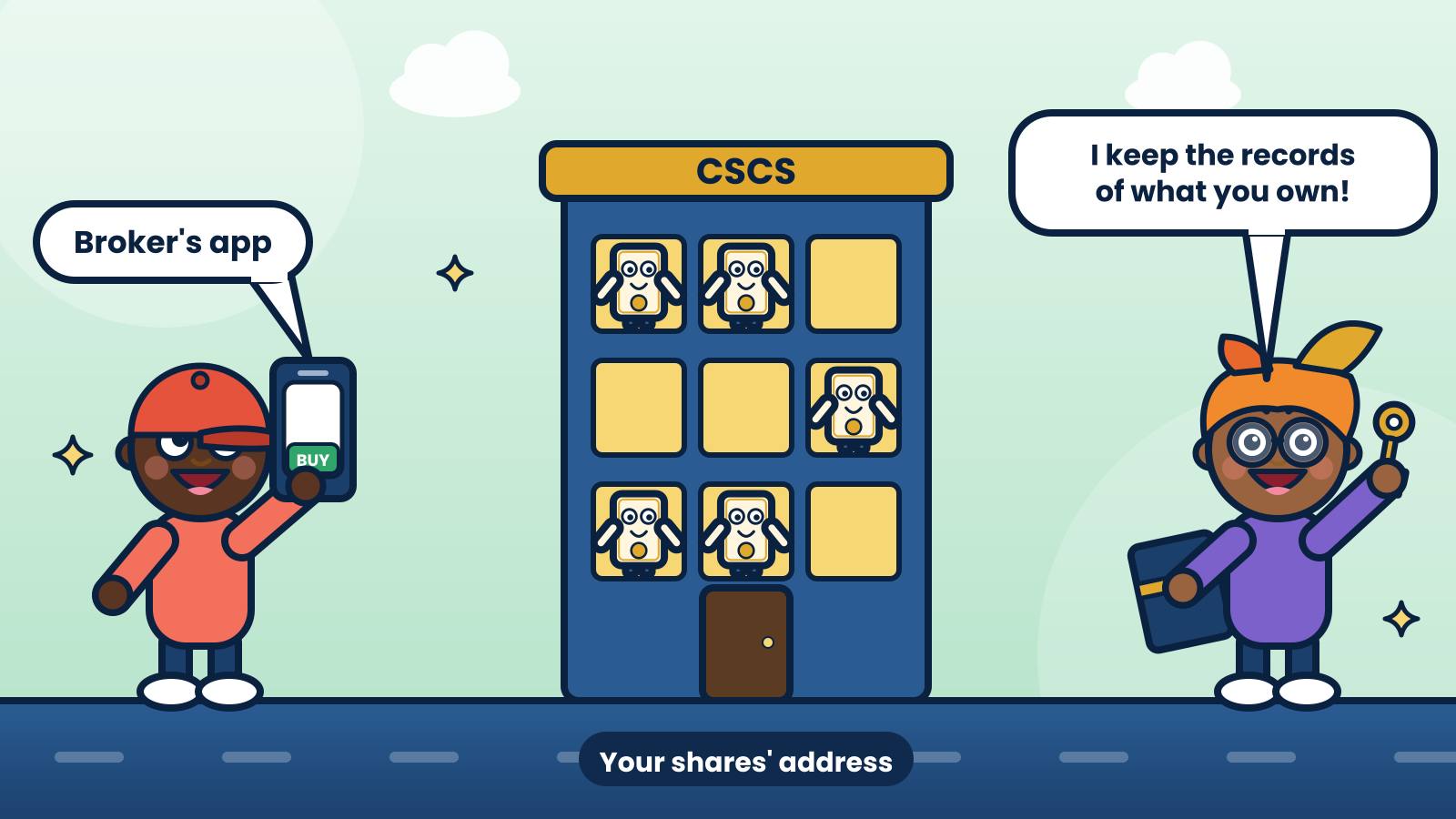
You can think of CSCS as the central vault and ledger for listed shares. It does three main jobs:
It holds shares electronically. Your listed shares sit in an account in your name, just as your money sits in a bank account.
It settles trades. When a trade happens, CSCS makes sure the shares move to the buyer and the money moves to the seller.
It keeps the record up to date. It shares information with registrars, so the companies know who their shareholders are.
Your CSCS account has a number, sometimes called a CHN (Clearing House Number) for you as an investor, and your stockbroker has its own member code. When you trade, your broker places the order, and the shares land in your CSCS account under that broker.
Here in Nigeria
CSCS is owned largely by market institutions and operates under the oversight of the Securities and Exchange Commission (SEC). Every licensed stockbroker in Nigeria connects to it. When you open an account with a broker for the first time, the broker opens a CSCS account for you as part of the process, so most people never deal with CSCS directly.
Three things in Nigeria make your CSCS account especially important:
No CSCS account, no trading. You cannot buy or sell listed shares without one.
Your BVN and identity are linked to it. This helps prevent fraud and helps match your shares to you.
Paper shares need it. If you have old certificates, they must be credited into a CSCS account before you can sell.
A simple example
Amina opens an account with a broker and buys 1,000 shares of a made-up company, Delta Foods Plc, at ₦20 each. Here is what happens in the background. The figures are illustrative.
Who |
What they do |
What Amina sees |
Amina |
Places an order through her broker's app |
Order confirmed |
Broker |
Sends the order to the exchange, where it is matched with a seller |
Trade executed at ₦20 |
CSCS |
Moves 1,000 shares into Amina's CSCS account and the money to the seller's side |
Shares appear on her CSCS statement after settlement |
Registrar of Delta Foods |
Updates the register using information from CSCS |
Amina is now on the list for the next dividend |
If Amina later opens a second account with another broker, she may have the same investor number but holdings recorded under different broker codes. Her total is the sum of both.
Why this matters to you
Your CSCS account is the closest thing to a single, official view of the listed shares you own. Knowing your CSCS number, and being able to get a CSCS statement, means you are not depending only on your broker's app. If a broker ever makes a mistake, closes down or has a problem, the CSCS record is what proves your holding.
It also matters for dividends. The details attached to your CSCS account and your registrar records should match: same name, same BVN, same bank account. Mismatches are one of the main reasons dividends go missing.
What people often get wrong
"My broker owns the account, so my shares belong to the broker." No. The shares are recorded in your name in CSCS. The broker is your agent for trading, not the owner.
"I already have a bank account, so I don't need a CSCS account." A bank account holds money. A CSCS account holds listed shares. They are linked, but they are different things.
"If I stop using my broker, my shares disappear." They do not. They remain in your CSCS account. You can move them to another broker if you want to.
The one thing to remember
Your CSCS account is where your listed shares actually live. Know your account number, and check your statement now and then, so you never have to rely on someone else's word about what you own. |
Over to you
Do you know your CSCS account number? If not, who would you ask: your broker, your bank, or a family member who handled it for you?
This article is for education only and is not investment advice. Company names, prices and figures in the examples are made up to show how things work. Rules, rates and fees change, so check the current position before acting.