Understanding Shares
Who Is the SEC, and Who Exactly Does It Protect?
By Oluwadamilola Ojo · 19 November 2026 · 4 min read
Who Is the SEC, and Who Exactly Does It Protect?
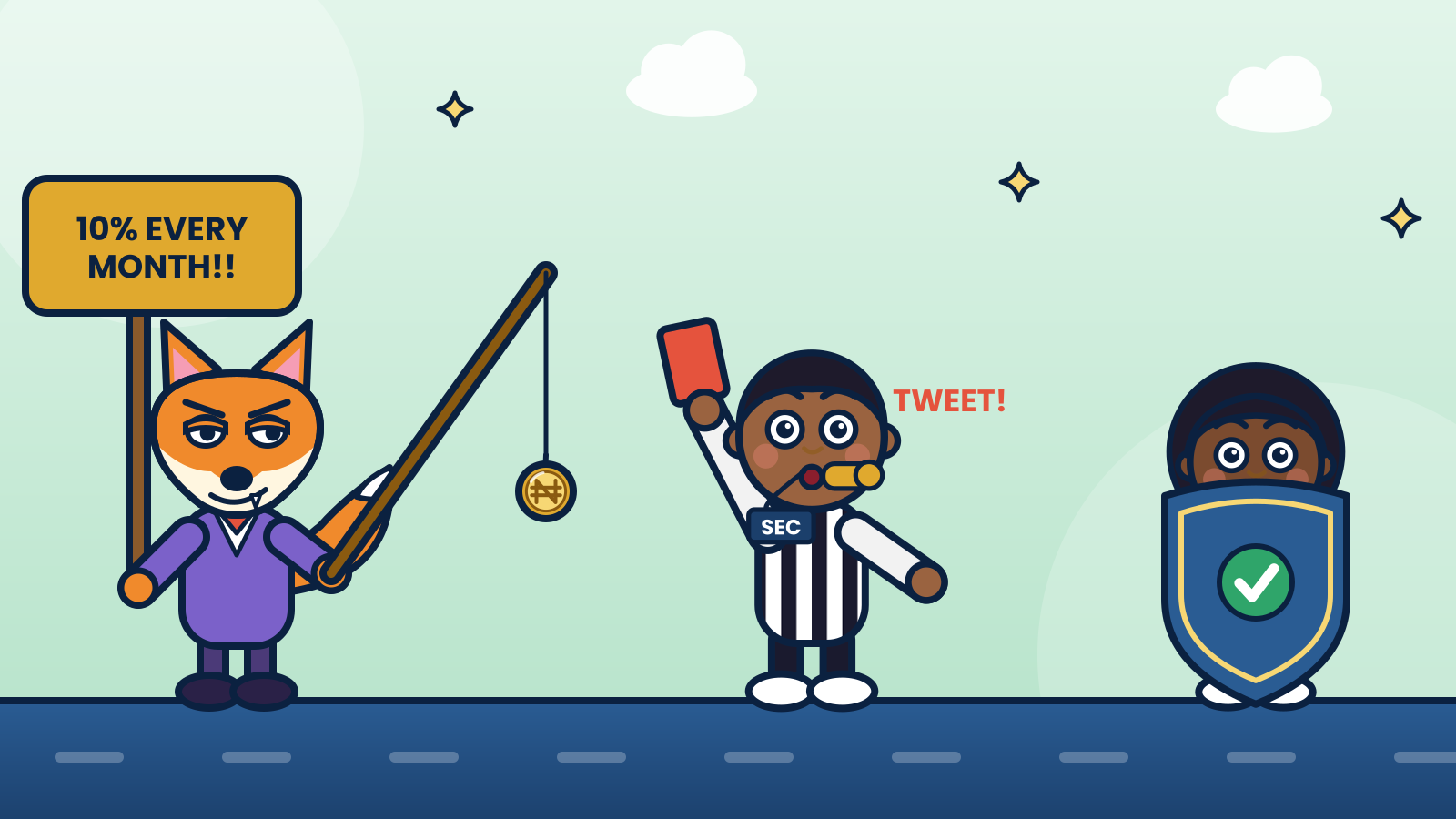
Every market needs a referee. In Nigeria's capital market, the referee is the Securities and Exchange Commission, the SEC. It is a government regulator, not a company that sells investments.
The SEC's job, in simple words, is to make the market fair, orderly and safe enough for people to trust it. It does this in a few main ways:
Registering and licensing. Brokers, fund managers, registrars, exchanges and others must be registered with the SEC to operate.
Approving offers. When a company wants to sell shares or bonds to the public, the SEC reviews the documents first.
Setting rules. The SEC writes rules on disclosure, trading, fees, investor protection and more.
Watching and investigating. It monitors the market and investigates suspected fraud, insider dealing and manipulation.
Punishing wrongdoing. It can fine, suspend or ban firms and individuals, and refer cases for prosecution.
Handling complaints. Investors who cannot resolve a problem with a firm can complain to the SEC.
Here in Nigeria
The SEC's powers come mainly from the Investments and Securities Act. In 2025 a new Investments and Securities Act replaced the 2007 law. Among other things, it gives the SEC clearer powers over newer areas such as digital assets, and stronger penalties for people who run or promote unregistered investment schemes.
The SEC has also been closely involved in the problem of unclaimed dividends, working with registrars and other agencies to help shareholders recover money that belongs to them.
It is important to understand who the SEC protects. It protects investors as a group by keeping the market honest. It does not guarantee that any investment will make money, and it does not repay you if a legitimate share falls in price. Its protection is strongest when you deal with registered firms through proper channels.
A simple example
Two friends each invest ₦200,000. The firms and outcomes are made up.
Situation |
Kemi |
Musa |
Where she or he invested |
Shares bought through an SEC-registered broker |
A WhatsApp "investment club" promising 10% a month |
What went wrong |
The share price fell 20% |
The organiser stopped responding |
Can the SEC help? |
No compensation for a price fall. That is normal market risk. |
The SEC can investigate and act against the scheme, but recovering the money may be slow or impossible |
Records |
Kemi has a CSCS statement proving her holding |
Musa has screenshots and a bank transfer |
Kemi lost value on paper, but she still owns real shares in a real company. Musa may have lost everything, because he never owned anything at all.
Why this matters to you
Before you invest, check that the firm is registered with the SEC. This is the single most powerful protection available to you, and it costs nothing. If something goes wrong with a registered firm, you have rules on your side and a regulator to complain to.
Remember too that the SEC protects the fairness of the market, not your profit. Prices still go up and down. The SEC's role is to make sure they move for honest reasons.
What people often get wrong
"If the SEC approved a share, it must be a good investment." No. SEC approval means the documents met the rules and the facts were disclosed. It is not a recommendation to buy.
"The SEC will pay me back if I lose money." The SEC does not compensate for normal market losses. There are some investor protection arrangements for specific failures by firms, but they have limits and conditions.
"Unregistered schemes are fine if many people are in them." Size is not safety. Some of the largest schemes in Nigeria's history were never registered.
The one thing to remember
The SEC is the market's referee. It licenses firms, sets the rules and punishes cheats, but it does not guarantee returns. Your first protection is to deal only with registered firms. |
Over to you
Have you ever checked whether an investment platform was registered with the SEC before sending money? What made you check, or what made you skip it?